The single most-recommended upgrade path. Airstream sells solar and lithium from the factory, sized to each model line (table below) — and going aftermarket unlocks far bigger off-grid builds. Either way, lithium + solar + an inverter is what turns a hookup-only trailer into a boondocking one.
Airstream's factory solar & lithium program, by model
Airstream matches solar wattage and lithium capacity to each model line. Two rules to know: factory lithium is only sold bundled with the solar package, and on Basecamp it requires the 360W solar tier. Everything below is from Airstream's own feature pages.
The 10.3/17.2 kWh “Advanced Power System” is a Model-Year-2026 motorhome platform (Atlas, Interstate) — it is not offered on travel trailers, so it's deliberately left off this list.
Sources (4)
Lithium (LiFePO4) house batteries
Factory or aftermarket
Factory 200–810Ah · aftermarket $230–949 per 100Ah
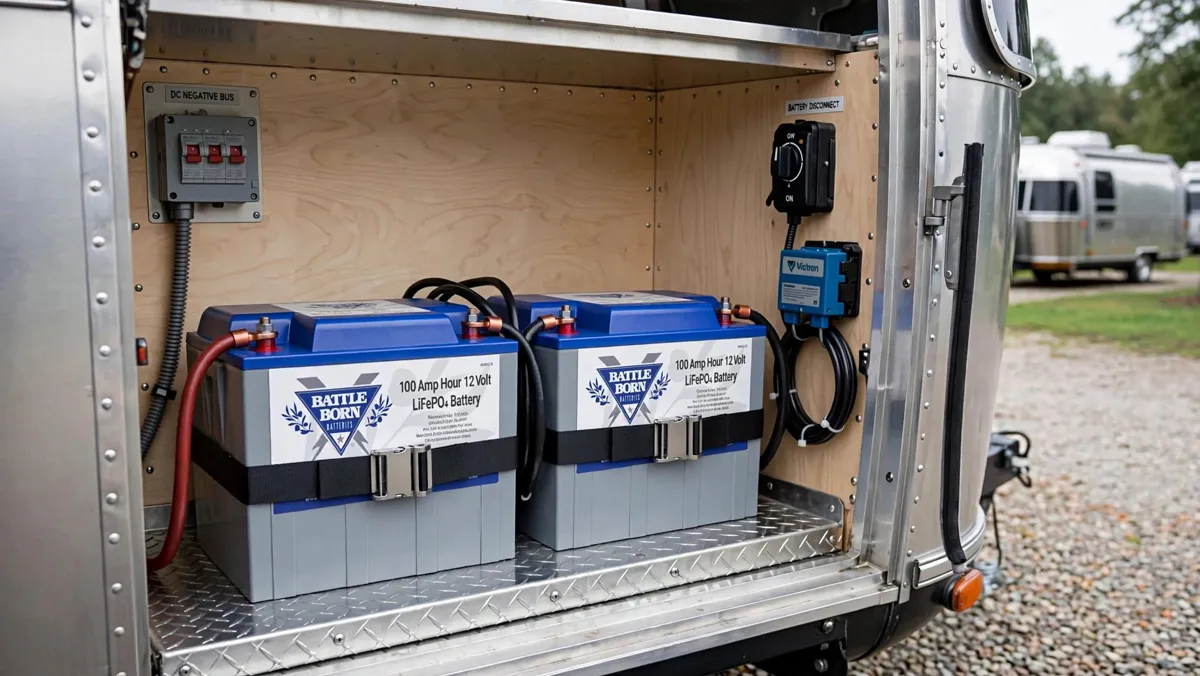
2–3× the usable capacity of lead-acid (100% depth of discharge vs ~50%), far lighter, ~10-year life, and they charge faster. Airstream now sells lithium from the factory as a heated 200Ah (~2.5 kWh) bank — standard on Classic and Pottery Barn, optional on Globetrotter, International, Flying Cloud, Caravel, Bambi and Basecamp — but only bundled with the solar package. The Trade Wind goes furthest with a standard 810Ah heated bank.
What owners pick Airstream's own factory cells are Battle Born — the Trade Wind runs three heated Battle Born units for its 810Ah bank. Aftermarket, Battle Born 100Ah (~$799, 10-yr warranty) is the default and the Epoch Elite V2T (up to 460Ah, built-in Class-T fuse, internal heater) is the installer high-end. Budget drop-ins (Power Queen, LiTime) run ~$230–280 per 100Ah.
Sources (3)
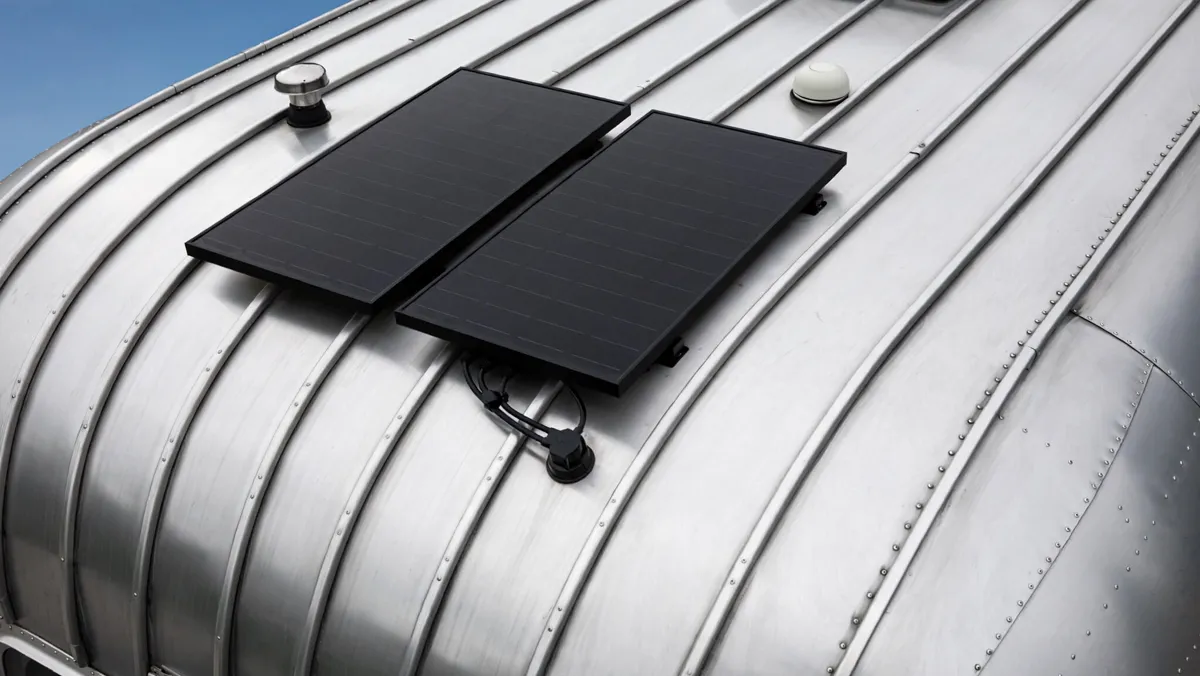
Rooftop solar (factory 100–600W, or bigger aftermarket)
Factory or aftermarket
Factory 300W $2,600 · aftermarket $500–3,000+
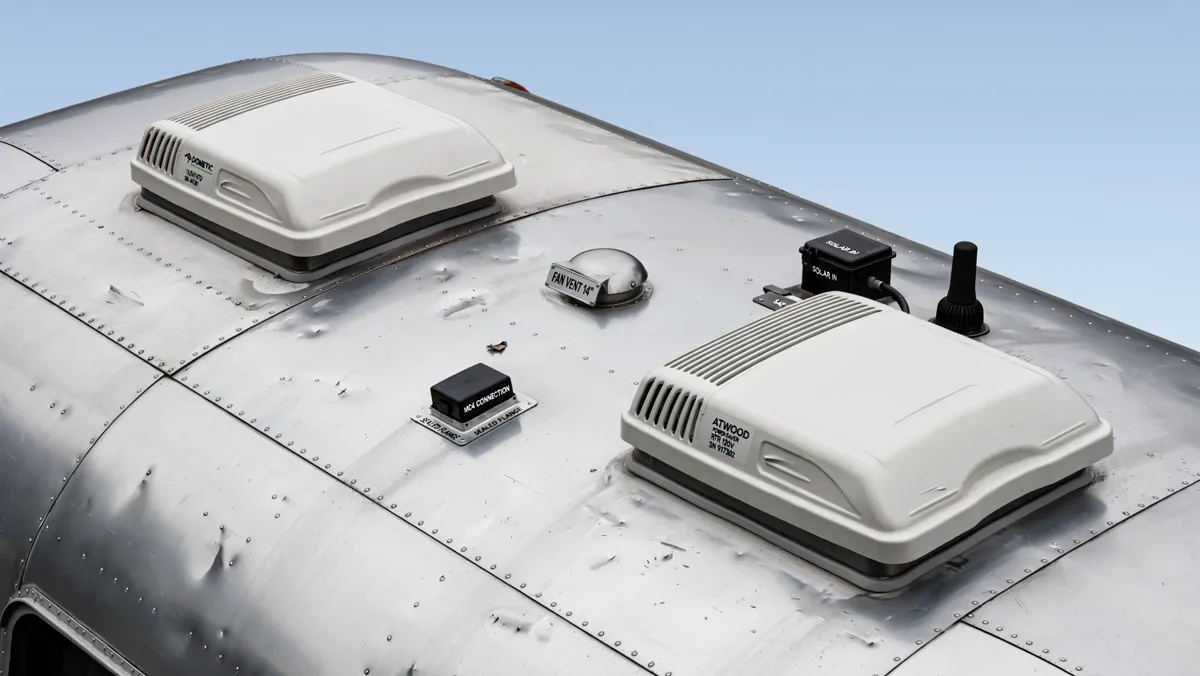
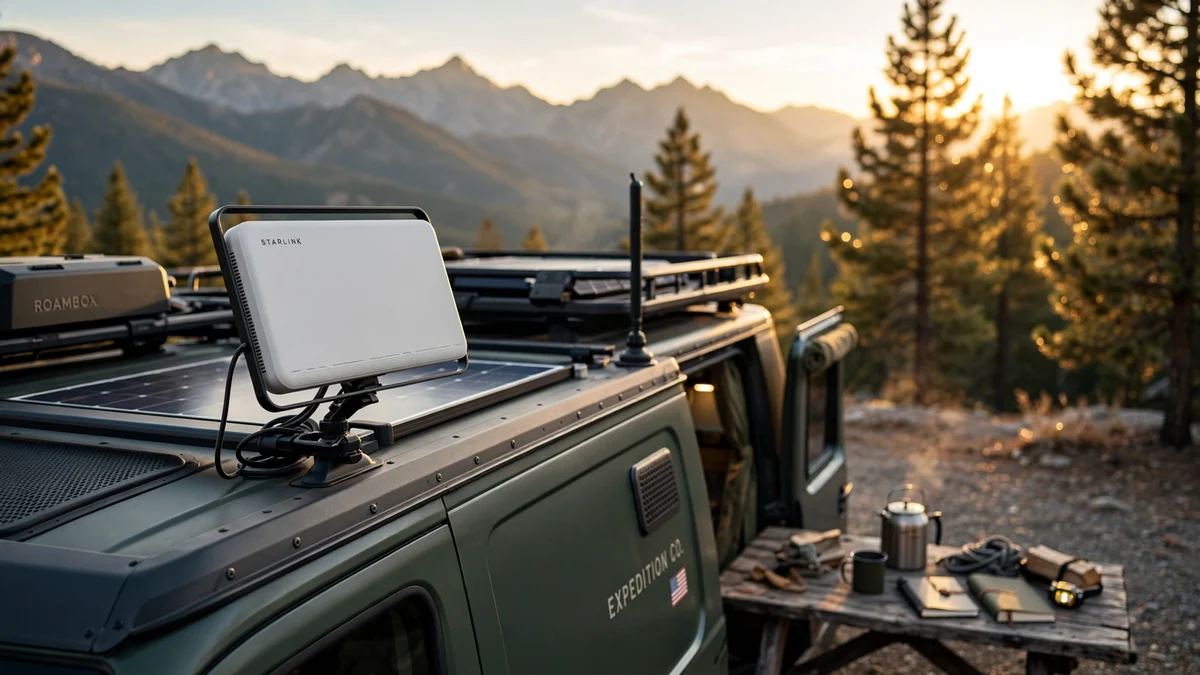
Keeps the battery bank topped up off-grid so you can stay out for days without a generator. Airstream matches factory solar to the model: 600W standard on Trade Wind, 300W on Classic, 300W optional ($2,600) on Globetrotter/International/Flying Cloud, and 100–200W on the smaller Caravel, Bambi and Basecamp — with a 360W tier on Basecamp when you add lithium. See the table above for the full per-model breakdown.
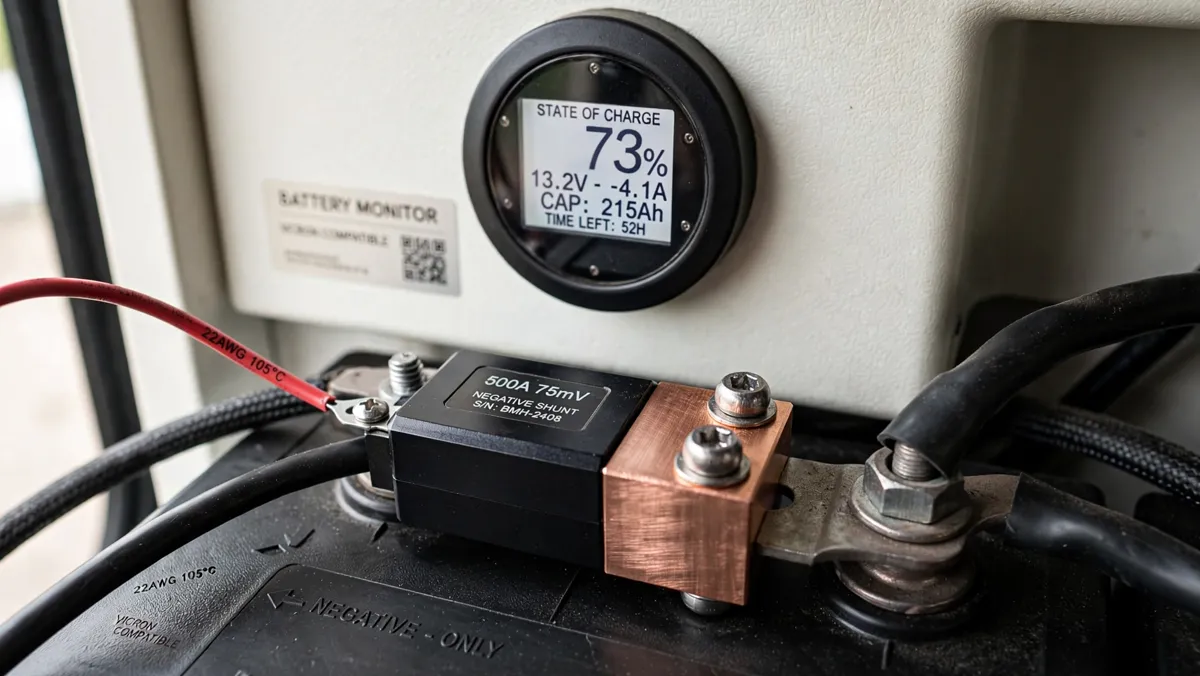
What owners pick The factory 300W package (three 100W panels + controller + interior battery monitor) is the easy box-tick. Owners going bigger fit 600–1000W aftermarket for serious boondocking; a front portable-solar port on 2017+ trailers lets you plug in a ground panel for shaded sites.
Sources (2)
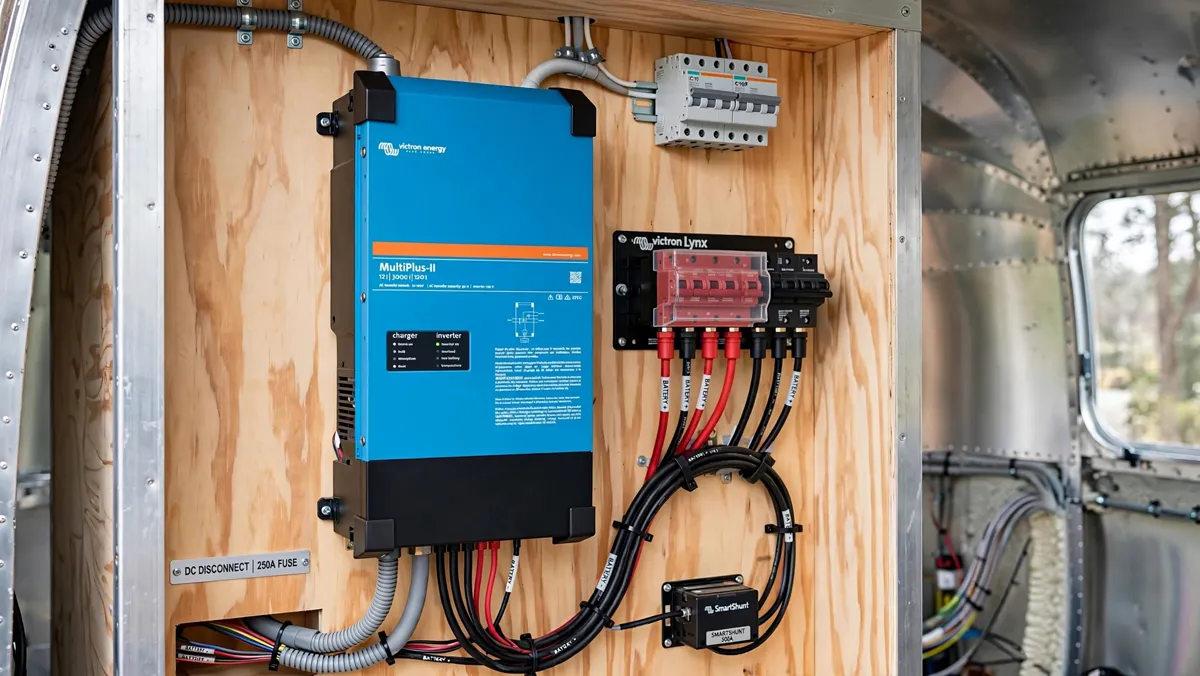
Inverter / inverter-charger (2000–3000W)
Aftermarket
$1,000–1,400 (Victron 3000VA)
Runs household AC outlets — coffee maker, microwave, TV — off the battery bank when you're not plugged in. A pure-sine 2000–3000W unit covers most loads; pair with lithium and solar for a complete off-grid system. The Trade Wind already ships a 3,000W inverter standard with every outlet inverted; on other trailers it's an aftermarket add.
What owners pick Victron MultiPlus / MultiPlus-II 12V 3000VA (US 50A model ~$1,088–1,375) is the near-universal installer choice, usually with a Victron Lynx distributor, Orion XS DC-DC charger and a Cerbo GX touchscreen for monitoring.
Sources (2)
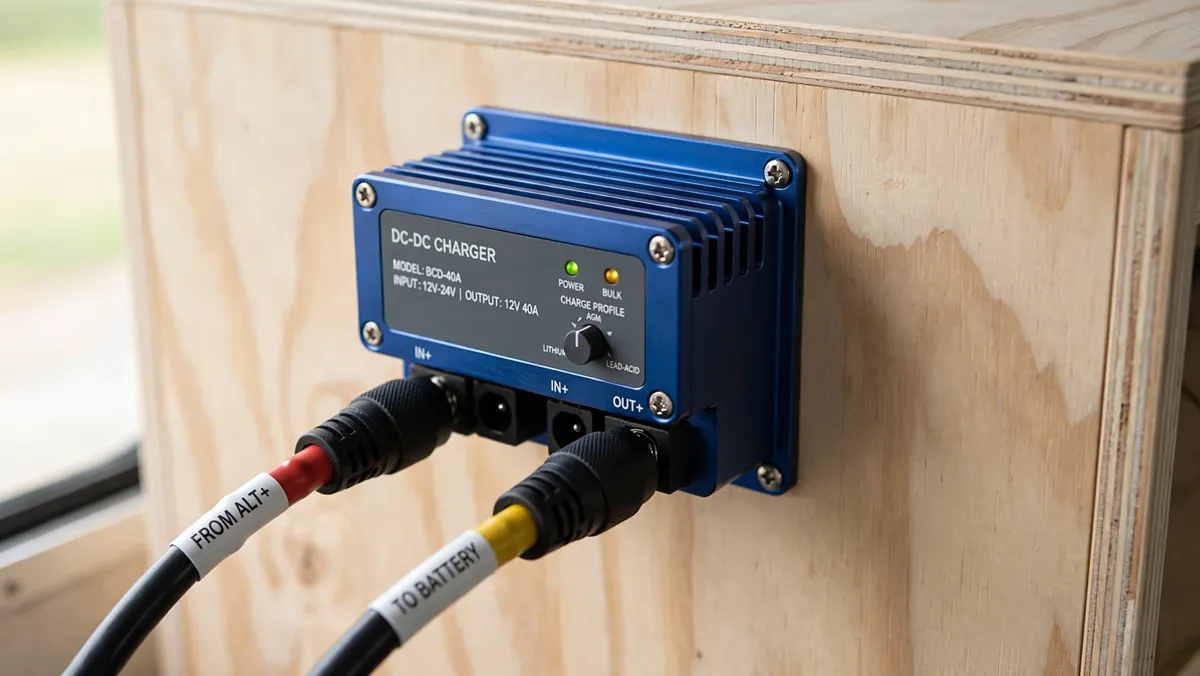
DC-DC charger (alternator charging)
Aftermarket
$150–350
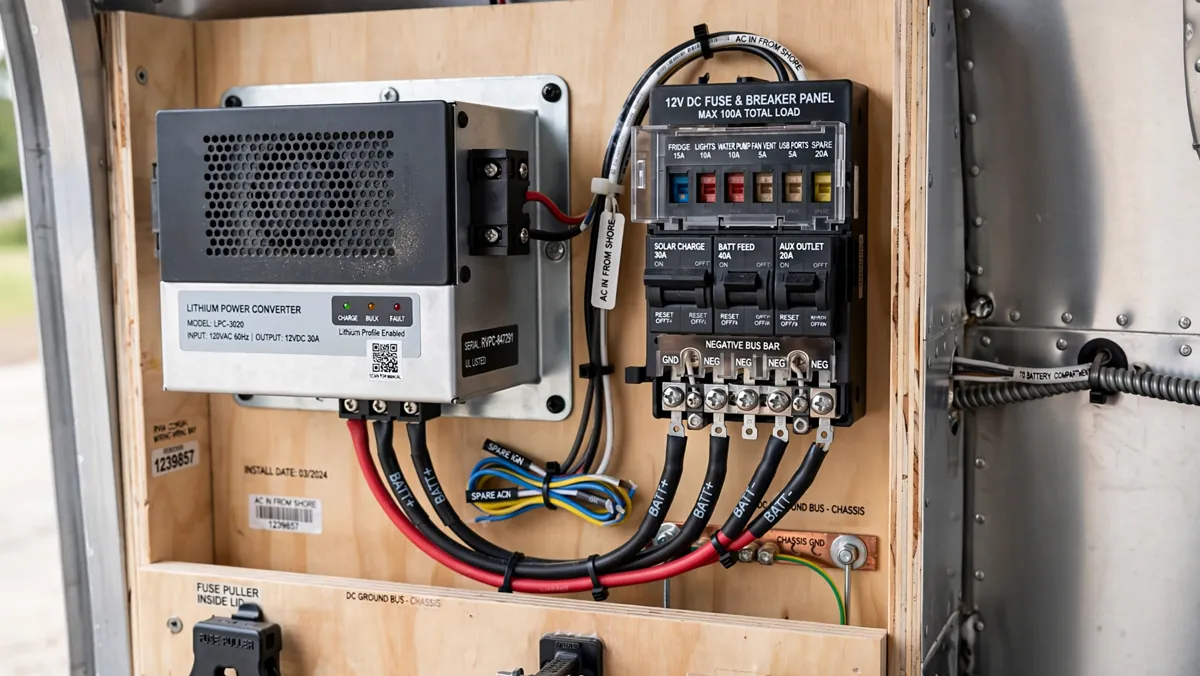
Lets the tow vehicle's alternator safely charge a lithium bank while you drive, without overloading the alternator. Essential once you switch to lithium because the factory converter alone charges slowly and the alternator needs current limiting.
What owners pick Victron Orion XS 1400 is the current favorite in installer builds.
Sources (1)